Friday, September 25, 2020

Peter Hotez on Vaccination.

Health expert Peter Hotez warns of a third COVID-19 wave, says a vaccine likely won't come for another year

"Health expert Peter Hotez warns of a third COVID-19 wave, says a vaccine likely won't come for another year" was first published by The Texas Tribune, a nonprofit, nonpartisan media organization that informs Texans — and engages with them — about public policy, politics, government and statewide issues.

Vaccine expert Dr. Peter Hotez warned Texas could face another potentially deadly spike in COVID-19 cases and said an immunization for the novel coronavirus likely won’t be widely available for another year during a conversation on Thursday at the 2020 Texas Tribune Festival.

Hotez, dean at the National School of Tropical Medicine at Baylor College of Medicine, criticized the White House’s lack of a coordinated response to the coronavirus, pointing to a drastic surge in cases in Texas, Georgia and Florida this summer.

“If we had had that leadership that had put in place a national campaign strategy to prevent the resurgence of COVID-19, we never would’ve been there,” he said.

At its peak in July, Texas logged more than 10,000 new cases of COVID-19 per day. Hospitals neared capacity, and open beds in intensive care units were sparse.

Now, new hospitalizations have fallen and the state is reporting about 3,500 new cases per day. But Hotez predicts another surge in Texas and across the nation this fall as students return to schools and colleges, and states loosen restrictions on businesses.

“We could have a resurgence — a third peak — that’s potentially worse than the one we just went through,” he said.

Even as Texans face yet another wave of the coronavirus, Hotez said a vaccine likely will not be widely available until the third quarter of 2021. Three U.S. companies are currently in the third phase of clinical trials and are expected to have enough data to determine efficacy by the end of the year.

Hotez warned communication between drug companies and the public is vital to a successful rollout, particularly amid growing public distrust of a potential vaccine. President Donald Trump has said he expects a vaccine to be ready before Nov. 3 — a claim widely disputed by scientists. A recent Axios-Ipsos poll found that 6 in 10 Americans say they would not take a COVID-19 vaccine as soon as it is available.

“We’re going to need an unprecedented level of communication which we don’t have right now, unfortunately,” Hotez said.

He said he has a “high level of confidence” in the science of the vaccine, but worries public misconceptions could derail the process.

This article originally appeared in The Texas Tribune at https://www.texastribune.org/2020/09/24/peter-hotez-coronavirus/.

The Texas Tribune is proud to celebrate 10 years of exceptional journalism for an exceptional state. Explore the next 10 years with us.

Friday, January 17, 2020

Psychology of Climate Change Denial


I have been going through the "Denial101x - Making Sense of Climate Science Denial" MOOC (Massive Open Online Course).  It is available for free on the edx platform and you can also see a reference to it at https://skepticalscience.com/denial101x-videos-and-references.html. I just watched two extended video interviews that relate to the "psychology of denial".  I think you should take a look at them.  The first one is the interview with Stephan Lewandowsky who is at the University of Bristol in the UK.  His main point seems to be that for the most part the deniers have political issues related to accepting the evidence.  He says that over two thirds of the variance in acceptance can be accounted for by a person's worldview.  So the denial is not based on the science

  • "When it comes to the drivers of belief or acceptance of scientific findings, in particular, climate change, then what we find is that one of the most important factors is a person’s worldview or you can call it a political ideology, their belief in things such as the free market. It turns out, in particular in the case of climate change, that people who are very enthusiastic about free markets and who think that government should not interfere with free markets, that they tend to reject the findings from climate change, climate science based on that ideology.  It’s a very strong effect. It’s a huge effect. In some of my data, it explains two-thirds of the variance. Now what that means is that if I know somebody’s belief about the free markets, I can reduce my uncertainty about what their climate change attitude is by two-thirds. There’s a huge correlation there between those two variables and that is one of the main drivers." 
Watch the entire video:
 

 The other interview is with Larry Hamilton from the University of New Hampshire:


Wednesday, December 25, 2019

Failure

The recent UN meeting about climate change looks like a complete failure to me.

This is from a recent article in the Texarkana Gazette.

“Since leaders first started talking about tackling the problem of climate change, the world has spewed more heat-trapping gases, gotten hotter and suffered hundreds of extreme weather disasters. Fires have burned, ice has melted and seas have grown.

The first United Nations diplomatic conference to tackle - change was in Rio de Janeiro in 1992. Here’s what’s happened to Earth since:


  • The carbon dioxide level in the air has jumped from about 358 parts per million to nearly 412, according to the U.S. National Oceanic and Atmospheric Administration. That’s a 15% rise in 27 years.
  • Emissions of heat—trapping carbon dioxide from fossil fuel and industry jumped from 6.06 billion metric tons of carbon in 1992 to 9.87 billion metric tons in 2017, according to the Global Carbon Project. That’s a 63% increase in 25 years.
  • The global average temperature rose a tad more than a degree Fahrenheit in 27 years, according to NOAA.
  • Since Jan. 1, 1993, there have been 212 weather disasters that cost the United States at least $1 billion each,when adjusted for inflation. In total, they cost $1.45 trillion and killed more than 10,000 people. That’s an average of 7.8 such disasters per year since 1993, compared with 3.2 per year from 1980 to 1992, according to NOAA.
  • The U.S. - Extremes Index has nearly doubled from 1992 to 2018, according to NOAA. The index takes into account far—from-normal temperatures, drought and overall dry spells, abnormal downpours.
  • Nine of the 10 costliest hurricanes to hit the United States when adjusted for inflation have struck since late 1992. The other one, Andrew at No. 6, hit in August 1992, according to NOAA.
  • The number of acres burned by wildfires in the United States has more than doubled from a five—year average of 3.3 million acres in 1992 to 7.6 million acres in 2018.
  • The annual average extent of Arctic sea ice has shrunk from 4.7 million square miles in 1992 to 3.9 million square miles in 2019, according to the National Snow and Ice Data Center. That’s a 17% decrease.
  • The Greenland ice sheet lost 5.2 trillion tons of ice from 1993 to 2018, according to a study in the Proceedings of the National Academy of Sciences.
  • The Antarctic ice sheet lost 3 trillion tons of ice from 1992 to 2017, according to a study in the journal Nature.
  • The global sea level has risen on average 2.9 millimeters a year since 1992. That’s a total of 78.3 millimeters,or 3.1 inches, according to NOAA.”


Wednesday, July 3, 2019

Sealioning

Sealioning is a common tactic among climate change deniers. According to the Urban DictionaryA subtle form of trolling involving "bad-faith" questions. You disingenuously frame your conversation as a sincere request to be enlightened, placing the burden of educating you entirely on the other party. If your bait is successful, the other party may engage, painstakingly laying out their logic and evidence in the false hope of helping someone learn. In fact you are attempting to harass or waste the time of the other party, and have no intention of truly entertaining their point of view. Instead, you react to each piece of information by misinterpreting it or requesting further clarification, ad nauseum. The name "sea-lioning" comes from a Wondermark comic strip.”


 Sealioning

Monday, March 25, 2019

Trends in the climate

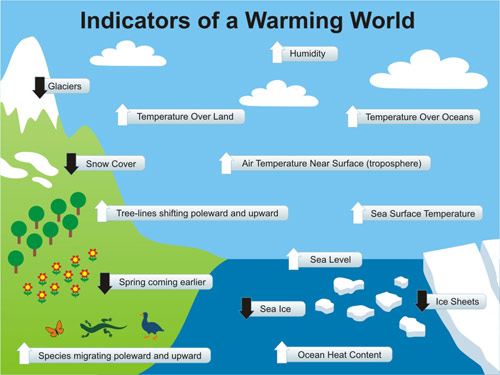
From https://skepticalscience.com/global-cooling.htm

Notice all of the trends shown on the image.  These are all due to a warming climate.  Don't let thecontrarian convince you otherwise!

Saturday, January 12, 2019

97%

'97% from Forbes Magazine https://www.forbes.com/sites/uhenergy/2016/12/14/fact-checking-the-97-consensus-on-anthropogenic-climate-change/#5222fccb1157


97% is a number both praised and criticized concerning the climate change issue.  An article published by Naomi Oreskes in 2004 found that 97% of the papers published by actual climate scientists (those who do research on the phenomenon) agree that the climate is changing and that it is due to human activities.  Oreskes examined 928 papers published between 1993 and 2004l. A more recent study (Cook et al 2013of over 12, 000 papers agrees with this figure.

There is a good discussion of this issue at https://skepticalscience.com/97-percent-consensus-robust.htm


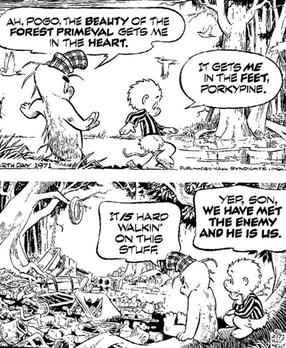
As Pogo says, "We have met the enemy and he is us."


Wednesday, January 9, 2019

FUSE Meeting

Last night I gave a presentation on climate to the Friends United for a Safe Environment group.

This is the text of an article printed in the Texarkana Gazette today.

A&M professor speaks about climate change

by Jennifer Middleton

Climate change is not a hoax and humans are responsible for the majority of the earth's increase in temperature, according to Texas A&M University-Texarkana professor Dr. David Allard. Allard, who is involved with the Climate Reality Project, said humans are dumping 110 million tons of man-made global warming pollution into the atmosphere every 24 hours.
"Most of that is carbon dioxide, but there's also methane, CFCs (chlorofluorocarbons) and other things that contribute to that," he said Tuesday during the January meeting of Friends United for a Safe Environment. "If we can control carbon dioxide, then perhaps we'll slow down this process."
He explained how global warming works and said that a large concentration of carbon dioxide prevents the release of infrared radiation the atmosphere has absorbed from the sun.
"More of the outgoing infrared radiation is trapped. It's like a blanket around the planet," Allard said. "The more carbon dioxide in the atmosphere, the thicker the blanket and the warmer it's going to get." He added that methane from cows and landfills is an even stronger driver of the heating process. Factors that contribute to the carbon dioxide levels include thawing permafrost, air transportation, oil production, crop burning, fertilization, forest burning, coal plants and land transport, along with industrial agriculture and industrial processes.
Gases from each of these has increased global surface temperatures dramatically, he said, with temperatures rising significantly since 2000.
"The hottest year on record was 2016," he said. "When we say that, what they've done is taken temperatures from different places around the world, so they're not talking about the temperature in Texarkana, they are taking about the change in temperature worldwide. They took thousands of readings from different places around the planet and that's how they were able to determine that we have those changes."
The heat and the rise in temperature causes a number of problems, he said, including an increase in heat stroke, storms, wildfires, drought and loss of animal life.
"The ocean is taking in a large amount of this heat," Allard said. "The heat accumulates in the atmosphere, but the ocean picks it up, so they oceans are warming up. That's dangerous for marine life, it's harder on coral reefs, the fishes. Storms are also getting stronger."
In 2015, three category five hurricanes were in the Pacific Ocean at the same time—Kilo, Ignacio and Jimena.
"The number and strength of these storms is incredible," he said. The warming process puts the hydrological cycle in higher gear and creates the stronger storms, he explained.
"The same extra heat that evaporates more water from the ocean causes bigger downpours and floods," Allard said. "It pulls moisture even more quickly from the soil, causing longer and deeper droughts. The earth's balance is off."
The warming has also significantly reduced the size of the glaciers in the Greenland ice cap and increased major cities' risk of flooding due to rise in sea levels. Many around the world are threatened and Miami, Fla. is the one at greatest risk in the United States, he said.
"Climate change is also a medical emergency," Allard told the group. "From a reduction in food supply, to heat stress, it will harm people and it is a real emergency."
Top diseases are also spreading rapidly due to the warming, including the West Nile virus, Chagas disease, dengue fever and the Zika virus.
Animals are also affected by the increase in temperature, with some already having gone extinct because their habitats changed.
"We are now at risk of losing up to 50 percent of all land-based species in this century," he said.
Many climate change deniers simply have not looked at the data, Allard said, adding that 98 percent of research supports the increase of emissions and temperatures over the years.
"How we can not see this is serious and how can we not address it? How can we ignore it?" he asked. "I don't think there's any doubt that we have to change."
Those changes can happen individually by choosing to be more responsible with power, Allard said. For example, using LED bulbs, driving an electric or hybrid car and installing solar panels on homes. Wind power is also being used around the world and Texas is one of the largest states in the production of wind energy.
"Yes, we can change," he told the group. "Will we change? We can only hope."
More information on global warming and how to advocate for cleaner energy can be found at www.climaterealityproject.org.

Wednesday, January 2, 2019

Jiggers


I had never heard of jiggers until I saw a story in the Texarkana Gazette about students doing a service project to help prevent this infestation. It is causes by species of flea (Tunga penetrans, the chigoe flea or jigger).  This is the smallest species of flea know at about 1mm in size.

"Jiggers is caused by the female sand flea, Tunga penetrans, which burrows into the skin of its host — usually on the feet, but occasionally on the lips, buttocks and even eyelids — and undergoes hypertrophy within a day or two, eventually expanding to the size of a pea (www.cdc.gov/NCIDOD/EID/vol9no8/pdfs/03-0041.pdf). The flea’s hindquarters remain in contact with the air, providing an avenue for breathing, defecating and expelling eggs, while creating a painful lesion on the host’s skin which often serves as an entry point for pathogenic microorganisms. Over the course of about three weeks, the flea will expel as many as 200 eggs into the environment and then die in situ, leaving a black crust covering a lesion containing the dead flea, which is eventually sloughed off from the epidermis. If left untreated, patients can die of secondary infections such as tetanus and gangrene, according to the CDC."  https://www.ncbi.nlm.nih.gov/pmc/articles/PMC3017281/

Take a look at this website with a video.  The organzation Sole Hope is fighting this nasty infestation.

Wednesday, October 31, 2018

Climate change and education


I have recently read some articles about the lack of coverage of climate change in high school curricula and introductory college textbooks in the United States (Meehan et al., 2018 and Yoho & Rittmann, 2018).  I see this as a great problem, especially in light of the recent IPCC report (IPCC, 2018).  We must educate our populace about the dangers of climate change.  These young people are the ones who will be most affected by this phenomenon.  They need to know the science of this and solutions to help mitigate the problem.

Meehan et al, 2018 state the following conclusions concerning the high school curricula:

Findings indicate that (1) about half the curricula portray human activity as a major cause of current climate change, (2) most curricula include information about climatic changes but few details about potentially proximal, near-term impacts of GCC*, and (3) most curricula offer a narrow set of strategies for responding to GCC. These findings suggest that educators should critically examine curricular materials they use to teach about GCC and that scholars should continually examine how GCC is portrayed to youth. *GCC = Global Climate Change

Yoho and Rittmann, 2018 conclude the following when examining introductory college science textbooks:

Energy technologies, climate change, and related environmental issues are found, on average, on ≤4% of textbook pages, and variation is large among individual textbooks. Discipline-based trends exist, especially for the energy technologies presented. Addressed separately as a non-renewable, non-fossil fuel, nuclear energy is found on ≤1% of textbook pages and unfavorably represented. The discussion within these science disciplines has implications for introductory-level education, public perception of science, and informed citizenship.

The recent IPCC report highlights the damage that a 1.5 C increase can produce.  We are actually on track for an even greater increase.  We need to have this information be passed on to the students so that they can make fact-based decisions concerning global climate change and not be influenced by those who are denying the evidence—for whatever reason.
References

IPCC. Intergovernmental Panel on Climate Change 2018 Report. Retrieved October 31, 2018, from http://www.ipcc.ch/report/sr15/

Meehan, C. R., Levy, B. L., & Collet-Gildard, L. (2018). Global climate change in U.S. high school curricula: Portrayals of the causes, consequences, and potential responses. Science Education, 102(3), 498-528. doi:10.1002/sce.21338


Yoho, R. A., & Rittmann, B. E. (2018). Climate Change and Energy Technologies in Undergraduate Introductory Science Textbooks. Environmental Communication, 12(6), 731-743. doi:10.1080/17524032.2018.1454337

Wednesday, August 29, 2018

Letter to the editor of The Texarkana Gazette

This was sent as a response to an oped (a very misinformed one) by Cal Thomas and published in the Gazette.

Climate change

TO THE EDITOR:
I am very disappointed in the Gazette for continuing to publish misleading opinion and information by climate change deniers. I am referring to the recent op-ed by Cal Thomas (June 30, Thirty years of 'global warming' panic). Mr. Thomas writes in a way that will make people think there is doubt about human-induced climate change and he cites material that mainstream climate scientists have refuted.
The facts are that the climate is warming and it is mainly due to human impact. We can see the signs already in rising sea level, heat waves, and many other important climate-related processes. Ninety-seven percent of the scientists who study climate agree that the change is occurring and it is human induced. Thomas writes like there is a debate. There is no debate as far as the science goes.
A good website for people to check is https://www.skepticalscience.com/.  This site shows reliable information that refutes the climate change denial. We must ask ourselves what kind of world are we leaving for our descendants and take action now.
David W. Allard
Texarkana, Texas


Friday, August 4, 2017

Plastics!!!

As Dustin Hoffman was told in "The Graduate", the future is plastics.  Well maybe not.  Plastics are a disaster for the environment. as can be seen by many recent stories.  One example is Henderson Island in the Pacific.  It has become an island of plastic.  I am sure there are probably many more like it.  We know about the Great Pacific Garbage Patch where the plastic is being accumulated by the oceanic gyres.  This is also probably occurring in the other oceans.  We must stop doing this to the environment. 

A recent study points out some alarming facts.
  • 8.3 billion metric tons of plastic have been produced since the 1950s--half of it made since 2004
  • 12 billion metric tons will accumulate in landfills or in the environment by 2050.
  • five million to 13 million metric tons of plastic enter the ocean each year.
  • about 6.3 billion metric tons of plastic have been thrown away since 1950. 
    • About 12 percent of that has been incinerated, which is the only way to permanently dispose of plastic; 
    • 9 percent has been recycled, which only delays final disposal; 
    • 60 percent — about 4.9 billion metric tons — is in landfills or scattered in the environment. 
Below are some items of interest, if this alarms you.


This Pacific island is covered in 38 million pieces of trash — mostly plastic


Wednesday, July 26, 2017

On a parasite binge.

Parasites are really fascinating critters.  They continue to amaze me.  I have read one book and am on another.  The current book is Parasite Rex by Carl Zimmer.  He is a terrific science writer for the New York Times.  Has written a number of great books.  Check out some of his other works at https://www.goodreads.com/search?q=Carl+Zimmer


The first book was I Contain Multitudes by Ed Yong.  He has a great TED Talk below.  He has a number of other talks on YouTube.  Goodreads also has a section on this book. 
https://www.goodreads.com/book/show/27213168-i-contain-multitudes   


Ted Talk


Enjoy.

Tuesday, December 6, 2016

The Gene: An Intimate History by Siddhartha Mukherjee

I am in the process of reading this and it is an excellent book.  Dr. Mukherjee is a wonderful writer.  He is able to explain things to the general reader in an understandable way.

This is a review from Pretty-Hot.com (Yeah I know, sound funky)

"In this book summary of The Gene, An Intimate History, Siddhartha Mukherjee begins with a detailed history of the gene and finishes with a topical survey of the gene in the latter half of the 20th century. Part One, “The “Missing Science of Heredity,” begins with the discovery of the “gene” in 1864. It continues with Charles Darwin and the many 19th century scientists who raised controversial questions about the origins of life and the journey of mankind. In the 20th century, American and British scientists inverted theories of genetics to promote eugenics, the science of using genetics and hereditary to “improve” a population.
The British devised theories in response to the rise of the middle class, while the Americans initiated sterilization programs to combat the influx of immigrants threatening the gene pool. Propaganda about the role of genes and hereditary captured the American imagination. By the 1920s, children were examined like animals at agricultural fairs—the most perfect paraded around as ideal specimens—and laws had been passed to prevent the birth of “imbeciles” and to ghettoize “the feebleminded.”
The Gene: An Intimate History weaves together scientific studies, gripping narratives, personal prose, and demanding questions to tell one of human history’s most important stories, one with the greatest consequences to our past, present, and future."

Short Interview with Dr. Mukherjee. 

Tuesday, November 15, 2016

NeuroTribes


NeuroTribes: The Legacy of Autism and the Future of Neurodiversity by Steve Silberman with a Foreword by Oliver Sacks (http://stevesilberman.com/book/neurotribes/).  Penguin Random House LLC 2015.
ISBN-13   9781583334676 | 978-1-58333-467-6 ISBN   158333467X | 1-58333-467-X
This past semester I have had a couple of students whose behavior I considered to be somewhat odd.  Then I began noticing some other students, not in my classes, on campus who behaved in a similar fashion.  They would not look you in the eyes and some of them would not speak when greeted. I began to wonder if they might be autistic.  The only experience I had previously had with a person who I knew to be autistic was with the child of a fellow faculty member.
After thinking about these students a bit, I began to, as we all do now, search on the web for information.  I then ran on a Fresh Air podcast with Steve Silberman (http://tinyurl.com/ha2cs6w).  I immediately ordered the book and I learned much about the autism spectrum.  Silberman covered the entire tangled history of autism including the various ego battles involved. I now have a much better understanding of this phenomenon and some ideas about how to interact with these possibly autistic students.  I still do not know if they are autistic and I am certainly not going to ask them!
Silberman points out how much this condition can vary.  There are really brilliant people who are autistic.  One of the most well-know is Temple Grandin (http://templegrandin.com/) at Colorado State University.  While others have very limited abilities.  NeuroTribes was the first science book to win the Samuel Johnson Prize. It has also won a California Book Award and a Books for a Better Life Award.  I think that every educator should read this book for a better understanding of autism.


Thursday, August 18, 2016

What is a well regulated milita?

The Second Amendment of the United States Constitution reads: "A well regulated Militia, being necessary to the security of a free State, the right of the people to keep and bear Arms, shall not be infringed."

What does this mean?  I have no idea but I think it is an amendment that has outlived its time and should be repealed--I don't expect a British soldier to come beating on my door! Does it mean that every Tom, Dick and Harriet should have all the guns they want--assault rifles etc.   I don't think it does.  Other countries seem to get along just fine without having guns rampant in the society.  Australia bought back guns and has had very few mass shooting after that.  Look at the number of gun deaths in the U.S. from the CDC.  And a number of these are children, some accidental, some not.

All firearm deaths in the U.S.

  • Number of deaths: 33,636
  • Deaths per 100,000 population: 10.6
I don't have a problem with hunters having a licensed firearm but we are overrun with guns and we are paying the price for it.  We need common sense gun control.


Thursday, June 2, 2016

Another Last Lecture

This one is very interesting and joyful in a way, but also sad since since Dr. Paush died.

Monday, May 23, 2016

Saturday, May 14, 2016

From the Storm


Lord take this burden
Take it from my mind
Lord give me freedom
Stand by my side

     Cause my sins the weight upon me
     And I need your love to save me
     From the storm

Lord drive these demons
Drive them from my soul
Lord will your heal me
Please make me whole

     Cause sorrow overwhelms me
     And I need to your strength to lift me
     From the storm

Lord I know I need you
Need you every day
Shine your light upon me
Please guide my way

     Even in my darkest hour
     I still believe your love can lead me.
     From the storm